
Guest blog by Farah Van Bulck
It may sound strange when I say that you might equally prepare your children for the future by sending them to dance classes or code camp. Why do I say that? From experience as a dancer who started dancing when I was four and went to a CoderDojo when I was seven, I know how to make the comparison.
Dancing, like coding, is based on algorithms. Mathematical patterns that logically flow from one movement to the next. But dancing is more than just the skill of creating the algorithms, it requires social and emotional competences. As classical dancers in the corps de ballet we are not individuals, we have to learn to think as one. Our bodies must move in synchrony, as if we have one body and one mind. As one connected network with one feeling. Not that we are a machine, on the contrary we show emotional expression in our dance. We can be asked to empathise with the feelings of a 17th century character, subdued yet expressive. Empathy with pure human feelings that we do not recognise in our own. We listen to the music and sense it as pure mathematics. Everything can be reduced to eight counts. This algorithmic skill combined with emotional intelligence (and of course a trained body) makes a dancer the unique artist/person he or she is.
We are trained on more than algorithmic thinking. Problem-solving abilities, collaborative abilities and cognitive flexibility are all relevant to performing a feat
Farah Van Bulck, Ballerina
Swan Lake, and more specifically the entrance of the 16 swans in Tchaikovsky’s 2nd act, is perhaps the best comparison one can make. To choreograph us as dancers, you need as much knowledge of algorithms as someone who wants to use AI for a Drone Show. Without good instructions (algorithms), we all crash into each other. I myself learned this when, as a 14-year-old, I was selected for the Royal Ballet’s summer school in London. Just before the performance for the parents, our stage turned out to be a meter smaller than the one we had practised on. As a result, we all bumped into each other during the last rehearsal on the new stage. However, for us and the choreographer this was only a small hurdle. With a few drink cans, we marked turning points on the smaller stage. With just one practice, we had already adapted to the new reality. Admittedly, we are trained on more than algorithmic thinking. Problem-solving abilities, collaborative abilities and cognitive flexibility are all relevant to performing a feat.
Another reason why I say dancers are very well prepared for the future of work is also partly related to algorithmic thinking and lifelong learning. We always think of the next step, we don’t only have a plan B but also a plan C for the day we can’t dance anymore. We know we can’t do the same job until we retire; if I’m lucky and don’t have too many injuries, I’ll be able to dance until I’m 40. After that I will start my 2nd career. I realise that I will have to learn again, but I realise that lifelong learning will be necessary in every job, so I will enjoy my passion as much as possible first. And what about my parents? They once thought that I would become an engineer or do something with robots, who knows, maybe they will be right one day. Or, who knows, I may even study applied psychology to support people in a machine-based society.
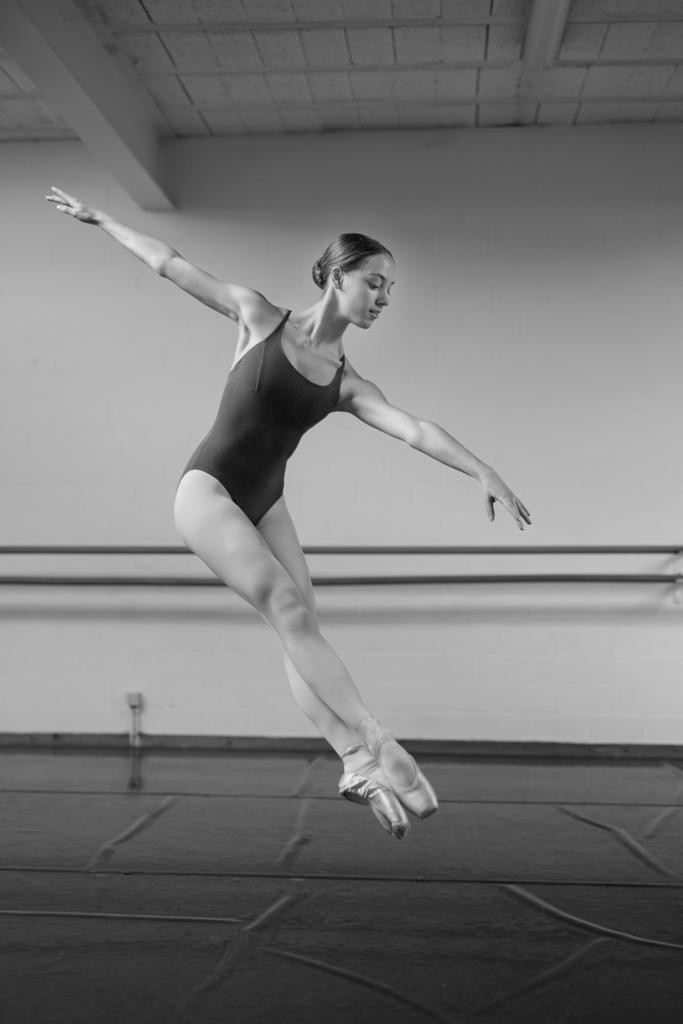
Farah Van Bulck is graduating in 2022 from the Royal Ballet School of Antwerp. The school prepares talented dancers for companies all over the world. 2020-2021 however were exceptional years where dancing together, learning and auditions could not take place as planned. This put the necessary extra pressure on the students; yet Farah shows with her contribution that it is not the skills (dancing) that will set them apart for the future of work, but competences and mindset.
Katja Schipperheijn (proud mum)
The debate surrounding the digital skills gap has accelerated in recent years. However, depending on how the digital divide is perceived and which drivers are leading the debate, our focus might take a different direction. Only when we understand this and speak the same language we can propose solutions. Read more Are digital skills overrated to thrive in the future?


Love this. Mindset is so important.
LikeLike